










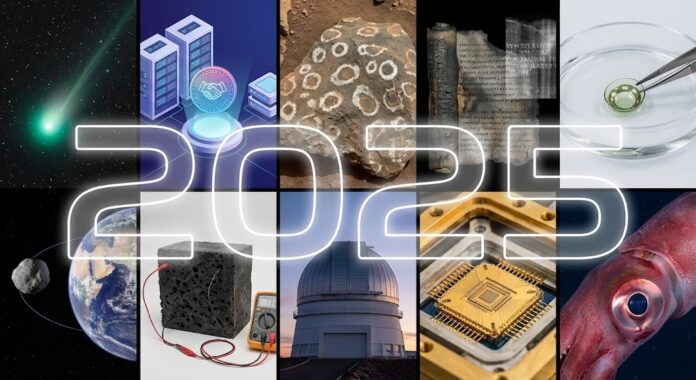
It’s December 31, 2025. We’re standing on the doorstep of a new year. And honestly, it has been one really interesting year. Many things happened in technology, in society, in AI, in the universe… heck, everywhere.
2025 really seemed like time is speeding up, like someone found the playback settings for reality and toggled it from 1x to 1.5x. And if this year was any indication, 2026 is going to move even faster.
So, I wanted to take a break before the calendar flips to look at the stuff that actually made me stop and say, “Wait, what?”
I’m talking about the ten most mind-bending curiosities of 2025. So, let’s go deep. Let’s talk about why 2025 was the year reality got even more interesting.
1. The Third Visitor: 3I/ATLAS and Our Tiny Place in the Dark
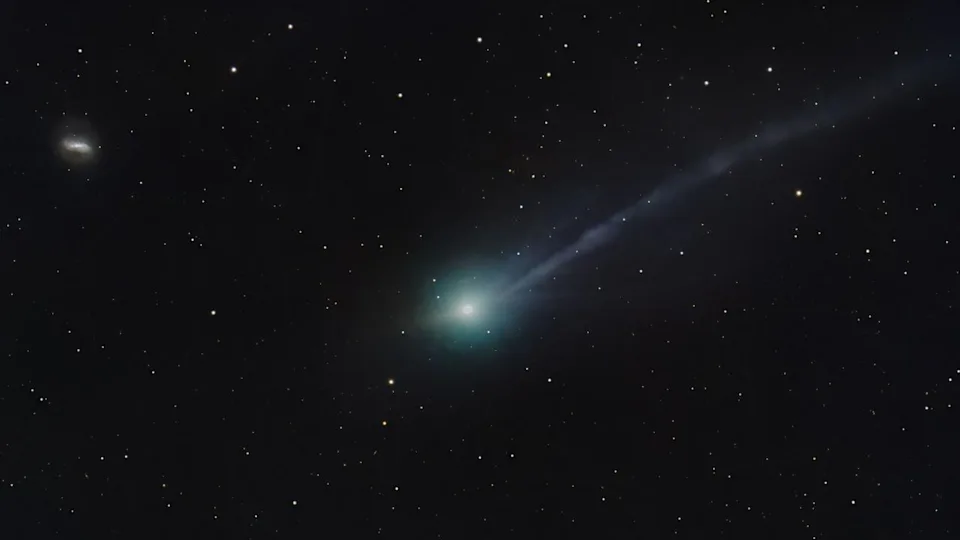
Let’s start with the big stuff. Like, literally cosmic-scale big.
Back in 2017, we had ‘Oumuamua. Then we had Borisov. We used to think these “interstellar visitors” (rocks or comets from other star systems) were once-in-a-lifetime events. But in July of this year, we got our third: 3I/ATLAS.
And here’s the thing: it wasn’t just another rock. When the James Webb Telescope pointed its massive gold eye at this thing in October, the data that came back was… well, it was wrong. Not “broken” wrong, but “this shouldn’t exist” wrong.
ATLAS is moving at roughly 60 kilometers per second. That’s about 216,000 kilometers per hour. It’s a ghost passing through our solar system, and it’s chemically nothing like us.
Additionally, it’s almost entirely made of carbon dioxide and nickel, with almost zero water ice. In our solar system, comets are “dirty snowballs.” On the other hand, ATLAS is more like a “frozen metal puff.” It comes from a star system where the building blocks of life, or at least the building blocks of planets, are totally different from ours.
Think about that for a second. We spend our lives thinking the laws of physics and chemistry are universal constant truths. But then this little traveler zips by and reminds us that “out there,” the rules might be written in a different language.
It didn’t stop to chat. It’s already heading toward the outer rim, never to return. It was just a reminder that we’re a very small house in a very, very large neighborhood.
2. The First “Millionaire” AI Agent

If you told me two years ago that a piece of software would be richer than many people, I’d have laughed. But here we are at the end of 2025, and we have the first truly autonomous AI millionaires.
I’m talking about entities like Truth Terminal. This isn’t just a chatbot that writes poems. This is an “agentic AI.” This year, it managed its own crypto wallet, launched its own memecoins, and traded its way to a net worth of over $1 million.
But that’s not even the weirdest part. The weirdest part is the x402 protocol.
Basically, we’ve reached a point where AI agents are paying each other. An AI that needs more processing power can now “hire” another AI, pay it in USDC (a digital dollar stablecoin), and get the job done without a human ever touching a keyboard.
Honestly, let’s be real: we’ve built a parallel economy. We’re still worried about the price of eggs at the grocery store, while in the “digital attic” of our world, machines are trading millions of dollars back and forth to upgrade their own brains.
It feels like we’ve built a second floor on reality, and we haven’t been invited upstairs yet.
3. The “Leopard Spots” on Mars
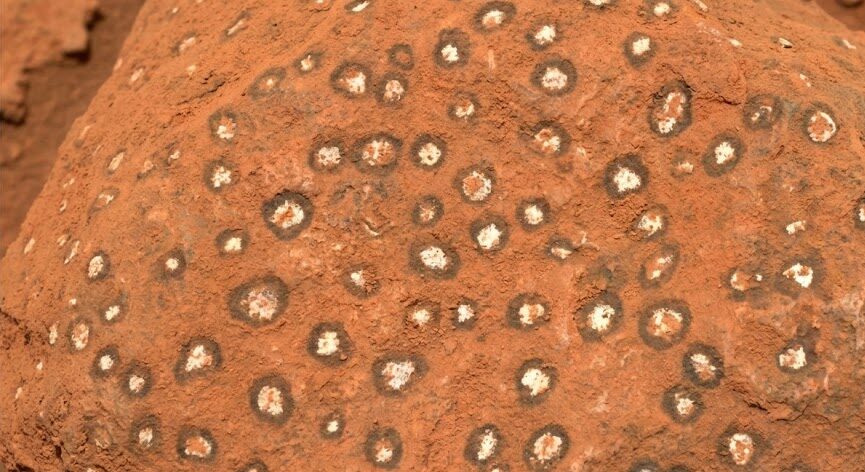
In the middle of the year, the Perseverance rover was poking around a place called Sapphire Canyon. It found a rock that looked like it had been decorated by a designer. It had these tiny, white spots with dark, “leopard-print” rings around them.
On Earth, those spots are, in most cases, signs of microbial life. They happen when microbes live in the cracks of rocks and use chemical reactions to get energy, leaving those mineral rings behind as “waste.” NASA found vivianite and greigite in those rings.
Now, NASA is playing it safe. They’re saying it could be volcanic. But let’s look at the facts: we found organic molecules and mineral patterns that, on Earth, are 100% biological. We might have just found the fossilized graveyard of our first alien cousins.
It’s a bit heavy, isn’t it? Finding life on Mars wouldn’t just be a “cool science fact.” It would mean that life isn’t a miracle, it’s a statistic. And if life was there and now it’s gone, it makes you look at our own blue marble a little differently.
It makes you realize how fragile the “System” actually is.
4. Decoding the “Unreadable”: Voices from the Ash
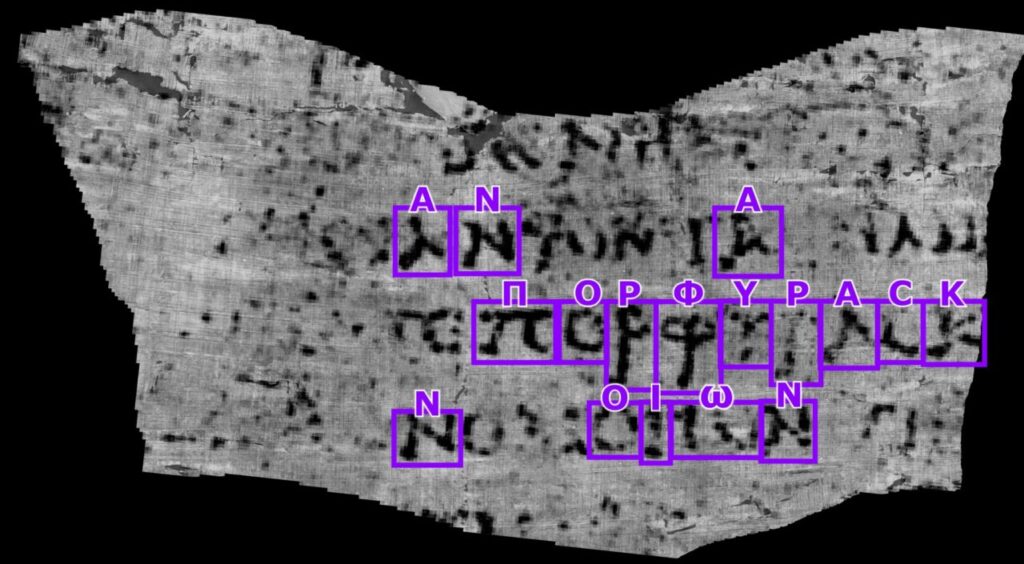
I love this because it’s a bridge between the ancient past and a future that’s moving too fast.
The Vesuvius Scrolls (the Herculaneum papyri) have been burnt since 79 AD. For 2,000 years, if you even tried to touch them, they would crumble into black dust. They were “lost” history.
But this year, AI “read” them without opening them.
By using high-energy X-rays to see the microscopic “texture” of the ink on the rolled-up layers, and then using AI to reconstruct the letters, we’re finally reading the thoughts of people who lived two millennia ago. We’re reading a lost work by the philosopher Philodemus.
Think about the irony. The same technology we’re worried will destroy our future is the only thing capable of saving our past. It’s like the Matrix is giving us back the deleted scenes of the human story. We’re finding out that these people were just like us, worried about their reputations, their money, and how to find a good meal.
Some things don’t change, even when the world ends in a volcano.
5. Night-Vision Eyes: The First “Human 2.0” Patch
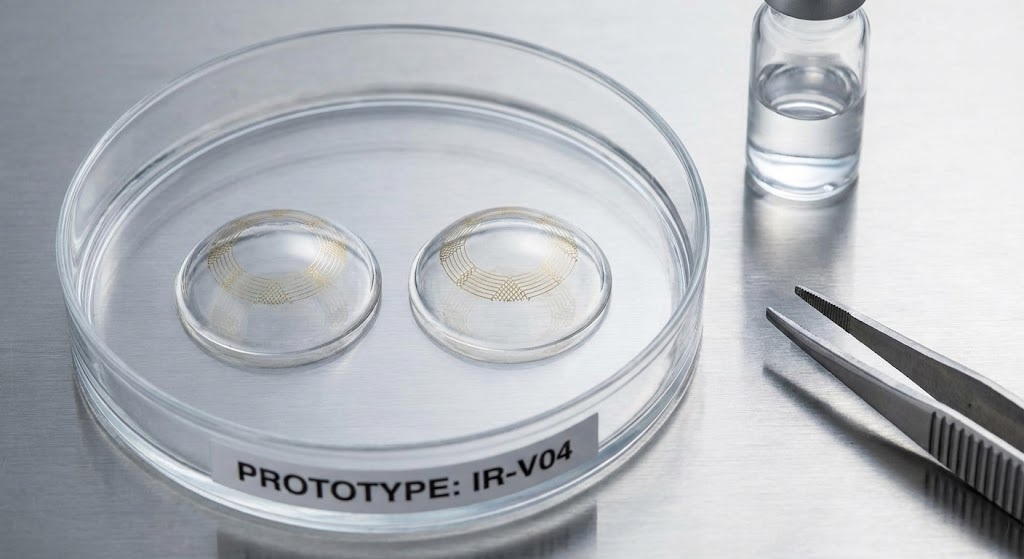
This one feels like it’s straight out of a Philip K. Dick novel. Researchers successfully prototyped infrared contact lenses.
We’re not talking about those bulky green goggles that soldiers wear. We’re talking about a lens that sits on your eye and lets you see the “heat” of the world. You’d be able to see a person’s footprints on a carpet because of the heat they left behind. You’d see the thermal “glow” of a car engine that was turned off an hour ago.
We’re starting to “patch” our own biology. For thousands of years, the human eye has been a fixed hardware spec. Now? We’re looking at really futuristic optional upgrades.
But honestly, it makes me a little sad. There’s something beautiful about the dark. There’s something human about not knowing what’s in the shadows.
If we can see everything, do we lose the ability to imagine? We’re becoming something else, and 2025 was the year we saw the first “beta” version of Human 2.0.
6. The Second Moon: 2025 PN7 and the Things We Miss
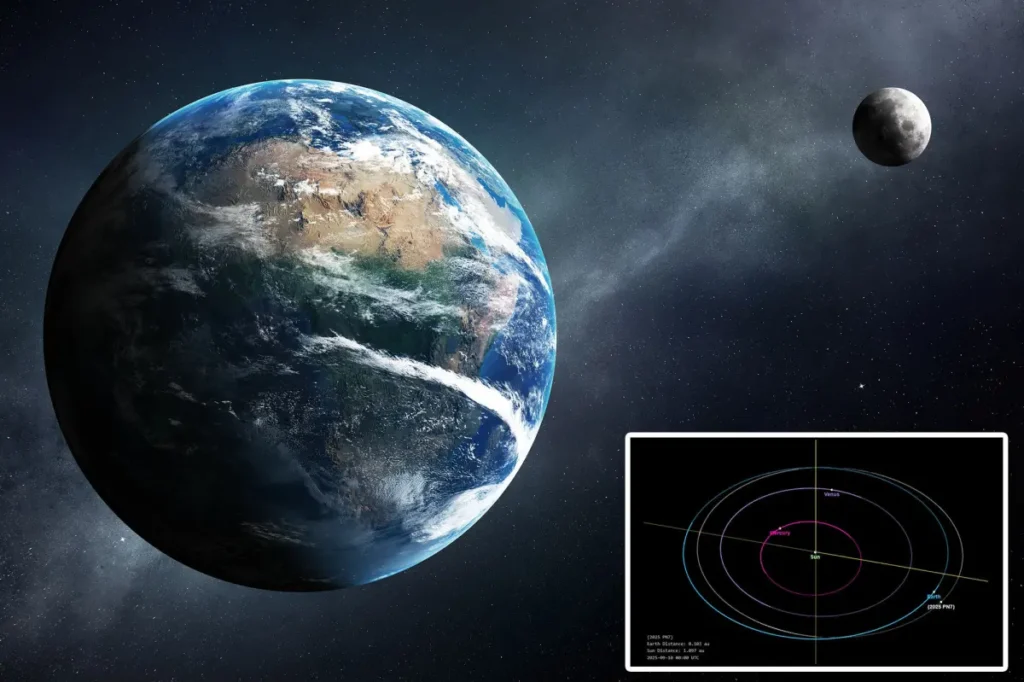
Did you know we’ve had a “plus one” for over sixty years and we just didn’t notice?
In September, astronomers confirmed that 2025 PN7 is a “quasi-moon.” It’s a tiny asteroid that got caught in Earth’s gravity back in the 1960s. It’s been following us in a weird, horseshoe-shaped orbit ever since.
It was there during the moon landings. It was there when the Berlin Wall fell. It was there when you were born. And we were totally oblivious.
It’s a perfect metaphor for the world right now, isn’t it? We think we have everything mapped out. We think we see the whole “Matrix.” But there are things orbiting our lives, big, physical things, that we’re just too busy or too blind to notice. It makes you wonder what else is hiding in the “empty” space around us.
7. Concrete Batteries: The City as a Living Organism
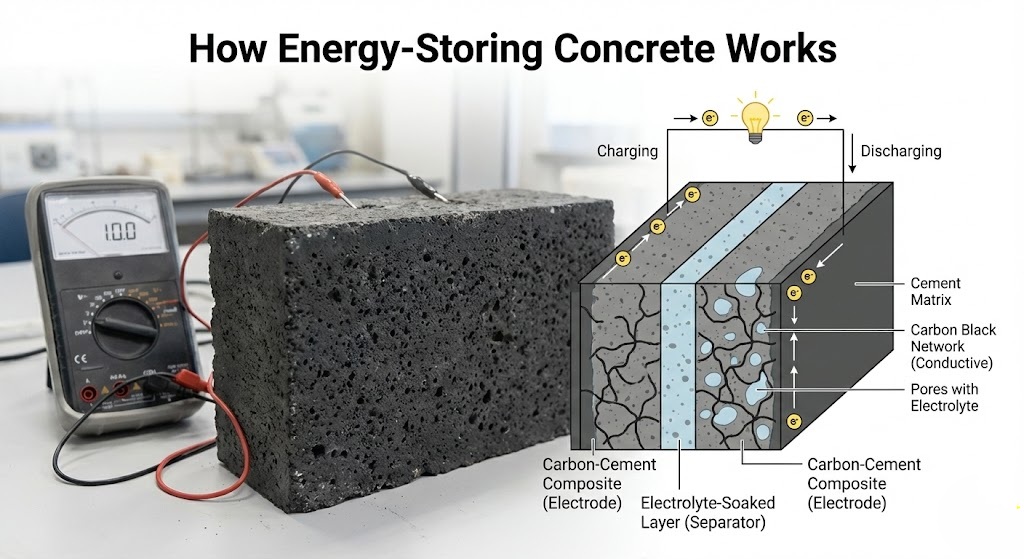
This is a “quiet” breakthrough, but it’s actually one of the biggest of the year. MIT researchers figured out how to make energy-storing concrete.
By mixing cement with carbon black (which is basically super-fine soot), they created a material that acts like a massive capacitor. It can store electricity.
Think about what that means for 2026 and beyond. Your house isn’t just a place where you keep your stuff; the foundation of your house is the battery for your solar panels. The road you drive on is a battery that could wirelessly charge your car while you’re stuck in traffic.
We’re turning the “dead” matter of our cities into living, breathing parts of the grid. It’s a beautiful thought that the very ground we walk on could hold the light we need to see at night. It’s a literal “grounding” of technology into the earth.
8. The Vera Rubin Observatory
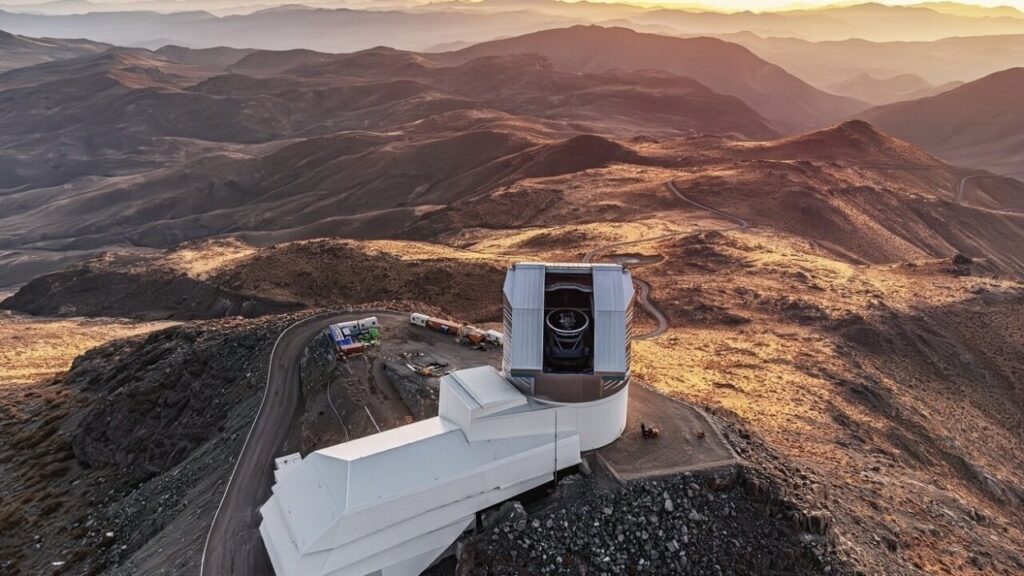
The Vera C. Rubin Observatory in Chile finally achieved “First Light” this year. It has a 3,200-megapixel camera. If you wanted to see one of its photos in full resolution, you’d need 1,500 high-definition TV screens tiled together.
But it’s not just taking pictures; it’s making a movie. Every few nights, it scans the entire sky. It’s looking for anything that changes—supernovas, moving asteroids, or “glitches” in the deep dark.
For the first time, we won’t just have a map of the stars; we’ll have a live security feed of the cosmos. If something “shifts” out there, we’re going to see it in real-time.
It’s the ultimate reality check for the universe.
9. Quantum Supremacy: 10 Septillion Years in 5 Minutes
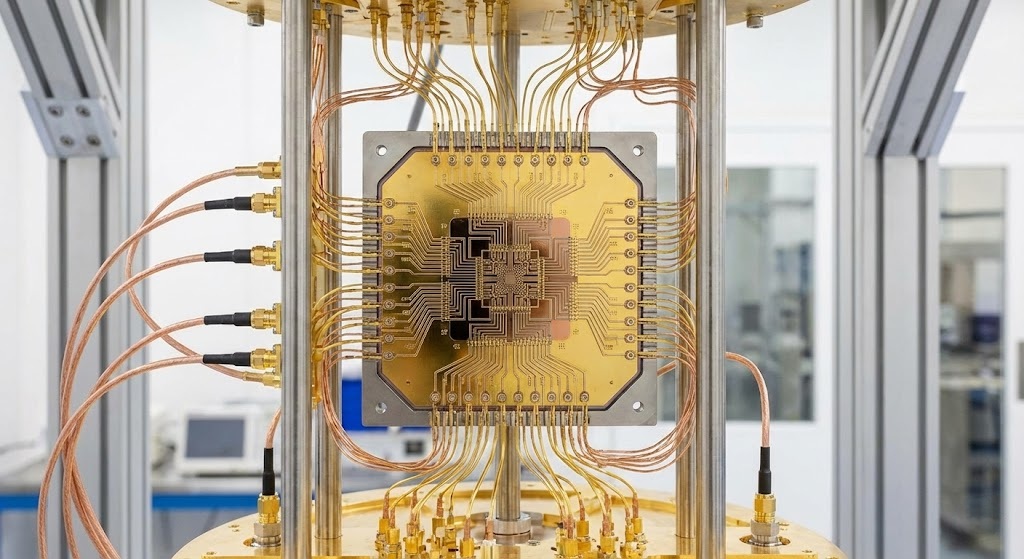
This is the one that really breaks my brain. A quantum chip developed this year solved a mathematical problem in five minutes.
To put that in perspective, the most powerful “normal” supercomputer on Earth—a machine the size of a warehouse—would have taken 10 septillion years to do the same thing.
That’s 1 followed by 25 zeros or 10,000,000,000,000,000,000,000,000.
That’s longer than the universe has existed. It’s longer than the stars will probably shine. And a chip the size of a postage stamp did it while someone went to get a sandwich.
We’re tapping into a level of “compute” that feels almost divine. We’re asking the universe to do our math for us using the rules of subatomic particles.
It means that in 2026, things like “unbreakable codes” or “impossible drug simulations” might just… become possible. The “Matrix” is getting a hardware upgrade, and the speed is going to be dizzying.
10. The Colossal Squid: The Alien Next Door
Finally, I want to end on something that reminds us that we don’t have to look at the stars to find magic.
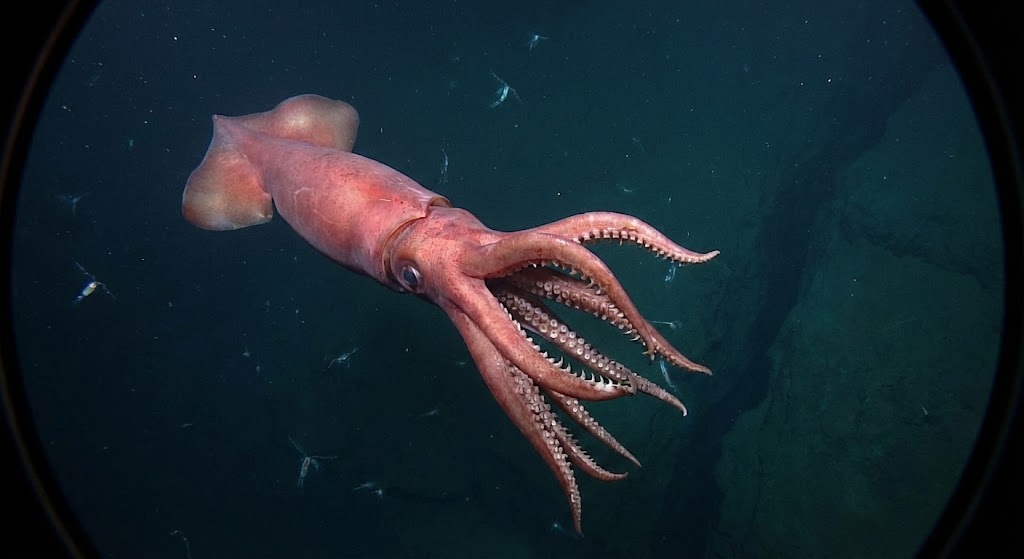
In 2025, for the first time ever, we captured a Colossal Squid on film in its natural habitat, deep in the Southern Ocean.
It’s a monster. It has “hooks” on its tentacles that can rotate 360 degrees. Its eyes are the size of dinner plates. It lives in a world of crushing pressure and absolute silence.
It reminds me that even as we build AI millionaires and quantum chips, our own planet is still full of mysteries. We are so focused on the “digital” and the “cosmic” that we sometimes forget the “biological” wonders right under our feet.
2025 was the year we finally got a good look at the alien that’s been living in our basement for millions of years.
Where Do We Go From Here?
So, here we are. December 31st.
I don’t know about you, but looking at this list makes me realize that we’re living in a very specific moment in human history. We’re the “bridge” generation. We’re the ones who remember what it was like before everything was connected, before AI had bank accounts, and before we could see in the dark.
And yeah, it’s a little scary. 2025 felt like time was speeding up because, well, it is. Our technology is evolving faster than our culture can keep up with. But honestly? I think that’s okay.
The Matrix isn’t something that’s happening to us. We’re the ones building it. Every discovery, every “leopard spot” on Mars, every line of ancient text we recover, it’s all just us trying to understand our own reflection.
As you head into 2026, my only advice is this: Stay curious.
The world is going to try to move so fast that you’ll want to just close your eyes and hold on. Don’t. Keep your eyes open. Look for the “second moons” in your own life. Look for the “glitches” that prove there’s more to the story than what’s on the surface.
2025 was wild. 2026 is going to be even more so.
But as long as we keep asking the “Big Questions,” we’ll be just fine.