




















The headlines are dizzying. Depending on who you ask, artificial intelligence is either the key to unlocking a future of unimaginable prosperity or the harbinger of mass unemployment, a thinking machine poised to make human labor obsolete. You’ve heard the pronouncements: Robots are coming for our jobs. Learn AI or be left behind. Mass unemployment is inevitable.
Here’s the thing: most of that is hype.
If you peel back the layers of breathless news coverage and Silicon Valley promises, a much different picture emerges. The actual impact of AI on the world of work isn’t a sudden, dramatic apocalypse. It’s a slow, messy, complicated, and deeply human story. It’s a story of gradual transformation, reluctant adaptation, and a whole lot of real-world friction.
Forget the science fiction. The reality is far more mundane, and in some ways, far more interesting.
This is THAT story. That article. And it is a long one.
We’re going to cut through the noise and look at the evidence. We’ll break down what today’s AI can and cannot do, why your company’s 20-year-old software is a better job security program than you think, and how real-world forces like liability law, union contracts, and simple public trust are putting the brakes on runaway automation. We’ll walk industry by industry, from translation shops in Berlin to construction sites in Texas to government ministries in Bern, and show you exactly how AI adoption actually happens inside real organizations.
We’ll cover every time horizon from the next five years to the next hundred, and we’ll look at who’s pushing back, how they’re winning, and what that means for all of us.
So, take a deep breath. The story of AI and your job isn’t about an army of robot overlords marching into the office. It’s the story of a powerful, clumsy new tool that we are all, together, just beginning to figure out how to use.
And in that story, real human skills, the ones that can’t be coded, are becoming more valuable than ever.
Tasks Aren’t Jobs: The Most Important Thing You’ll Read Today
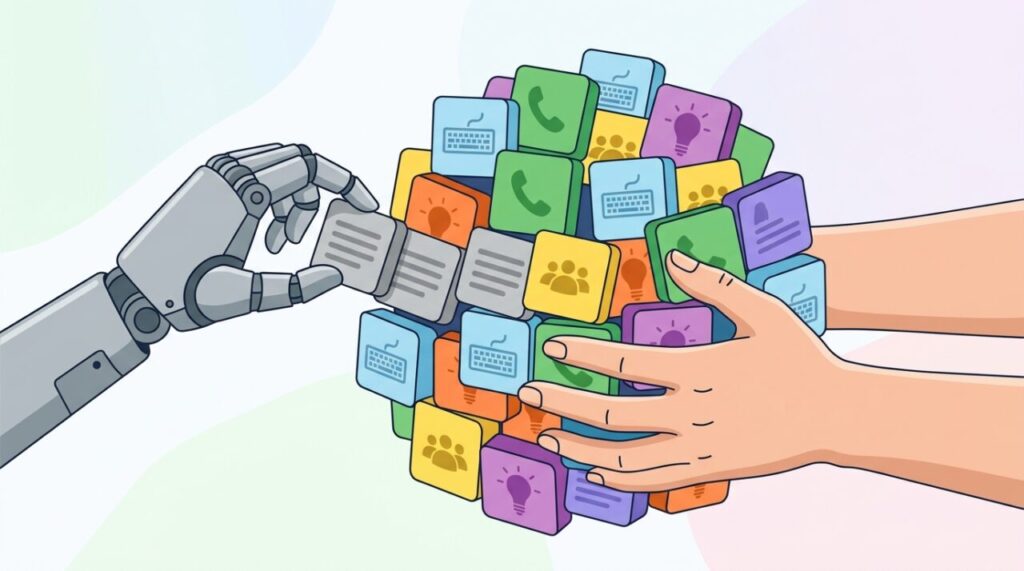
If you only take one thing away from this entire article, let it be this: A job is not one thing. A job is a bundle of tasks.
This is the single most important concept for understanding what’s really happening. Think about an accountant. They don’t just “do accounting.” They might spend their day entering data, preparing reports, calling clients to chase down missing information, brainstorming tax strategies with a partner, attending a training seminar on new regulations, and trying to unjam the printer.
AI, in its current form, is a tool for automating tasks within that bundle. It’s phenomenal at the repetitive, rule-based stuff. It can categorize thousands of transactions in seconds, review a million documents for a specific legal clause, or write a first draft of a basic report. It can do those specific tasks faster and more accurately than any human.
But it can’t do the whole bundle. It can’t replicate the uniquely human tasks: the strategic judgment, the empathetic client call, the creative problem-solving, the collaborative teamwork.
Because of this, AI is set to reshape far more jobs than it will outright replace.
The evidence bears this out. According to Boston Consulting Group (BCG), a striking 50% to 55% of jobs in the United States will be reshaped by AI in the coming years . “Reshaped” is the key word here. It means the day-to-day workflow will change. AI tools will handle some tasks, freeing up humans to focus on others. The number of jobs facing complete extinction, however, is much smaller.
Most projections suggest that only around 6% of U.S. jobs or about 10 million positions, are at high risk of being fully automated by 2030.
Globally, the story is the same. The World Economic Forum estimates that while AI could displace around 85 million jobs by 2030, it’s also expected to create 97 million new ones. This is the classic pattern of technological disruption: creative destruction. The invention of the automobile put blacksmiths out of business, but it created millions of new jobs in manufacturing, highway construction, and gas stations.
So, when you see a headline screaming that 300 million jobs are “exposed” to AI, remember what that really means. It refers to task exposure, not whole-job replacement. Workers in those fields are far more likely to see their jobs change, feel pressure on their wages, or face slower hiring cycles long before their role simply vanishes.
Interesting Fact: Many “job displacement” figures from major institutions refer to task-level exposure. This means a job is counted as “affected” if even a fraction of its duties can be automated, not because the entire role is becoming obsolete. The difference between “exposed” and “eliminated” is enormous, and most headlines ignore it completely.
What AI Can (and Can’t) Actually Do in 2026
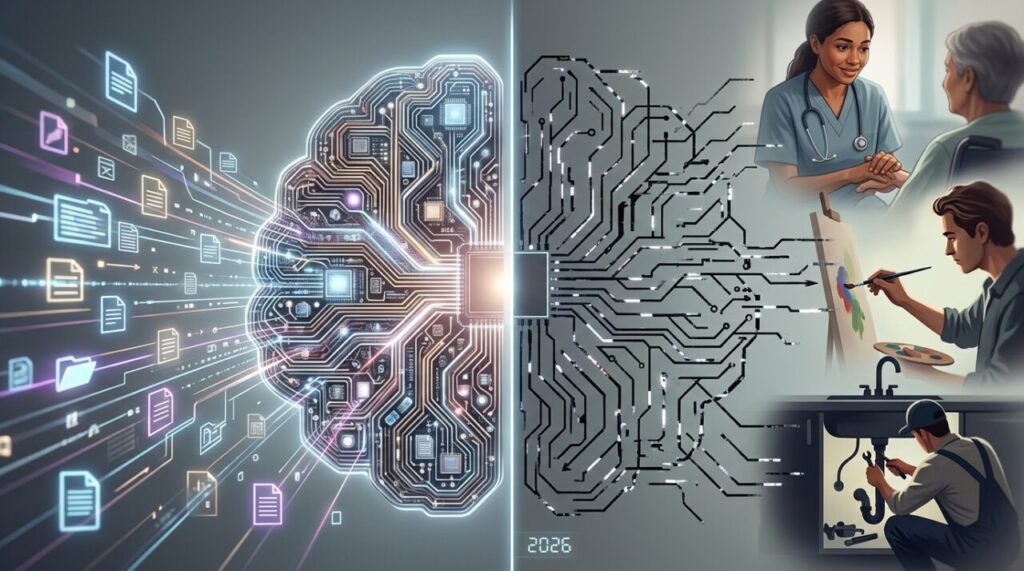
To really get to grips with this, we need a clear-eyed view of what today’s AI is capable of. It’s not the all-knowing, all-powerful intelligence from the movies. It’s a very powerful, but very specific, kind of tool.
What AI Absolutely Crushes
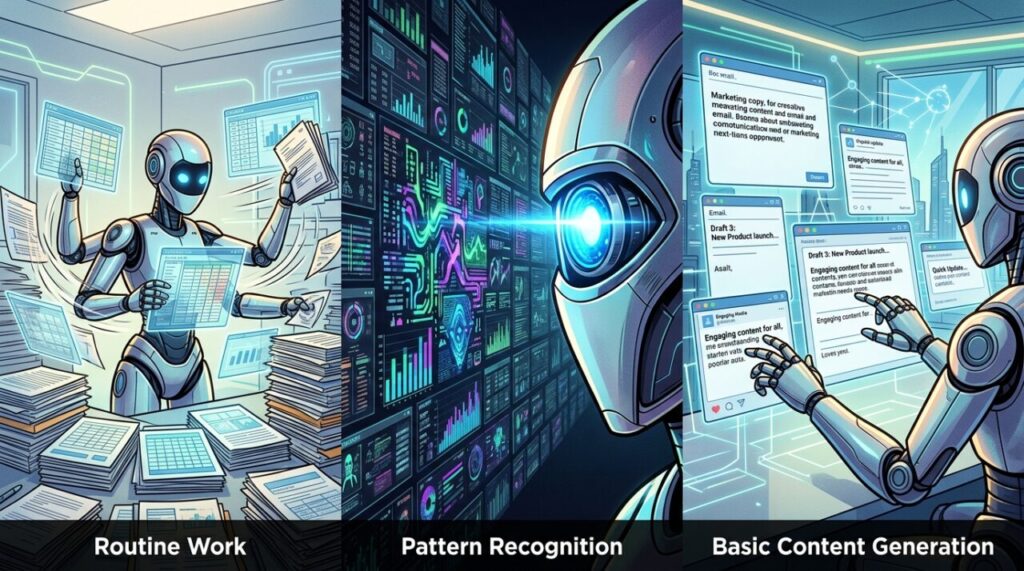
Current AI, especially the generative AI and large language models (LLMs) that have captured the public imagination, is a beast in a few key areas:
- Routine, Rules-Based Work: AI is the undisputed world champion of repetition. If a task is digital, predictable, and follows a clear set of rules, AI can probably do it. This includes data entry, basic bookkeeping, payroll processing, and sifting through documents for keywords. It’s why AI-driven chatbots are projected to automate up to 80% of routine tasks in customer service centers.
- Information Synthesis and Pattern Recognition: Humans are great, but we can’t read a million pages in five minutes. AI can. It can analyze huge datasets, identify subtle patterns, and generate summaries far faster than any of us. This is why it’s making huge strides in finance for compliance reviews and in medicine for analyzing medical images.
- Basic Content Generation: With the rise of generative AI like ChatGPT, Claude, and others, creating simple, template-based content has become largely automated. Generating basic marketing copy, social media posts, simple reports, or drafting a standard email is now a matter of seconds.
Where AI Hits a Brick Wall
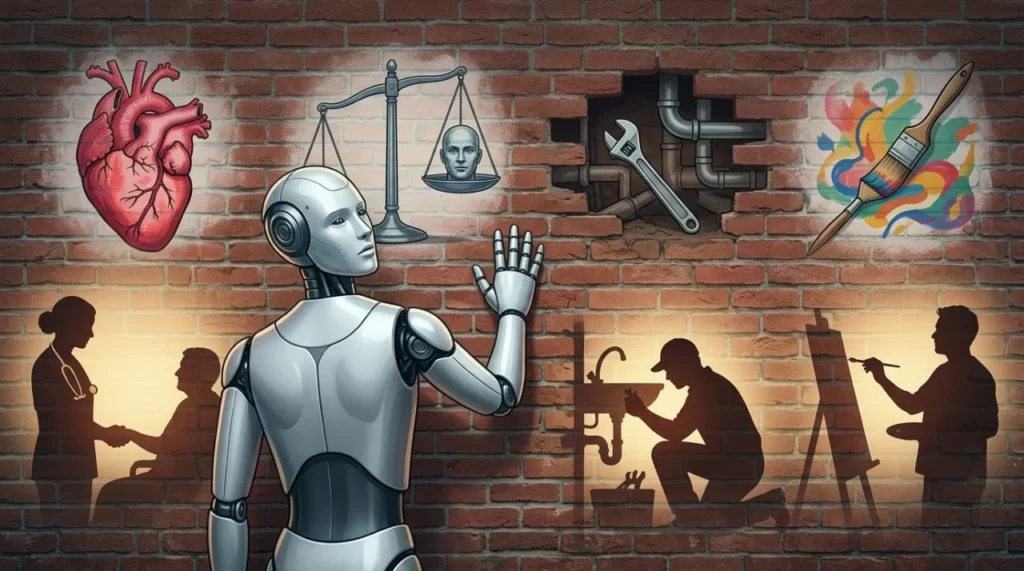
For all its power, today’s AI runs headfirst into a wall when it comes to tasks that are fundamentally human. It cannot reliably automate work that requires:
- Complex Social and Emotional Intelligence: AI can simulate empathy, but it can’t feel it. It can’t build genuine trust, persuade a skeptical client, or provide true compassionate care. This is the protective moat around jobs like nurses, therapists, social workers, and great managers. An AI can schedule a patient’s appointment, but it can’t hold their hand and explain a difficult diagnosis.
- Critical Thinking and Real-World Judgment: AI can process the information you give it, but it struggles with true critical thinking. It can’t evaluate nuance, understand context that falls outside its training data, or make complex ethical judgments. A human manager still has to look at the AI’s data-driven recommendation and ask, “Does this actually make sense for our business, in this market, right now?”
- Physical Dexterity and Unpredictable Environments: We’ve had factory robots for decades, but they operate in highly controlled, caged-off environments. Robots with the fine motor skills and adaptability to work on a messy construction site, navigate the unique chaos of a patient’s home, or fix a leaky pipe in a cramped space are still largely in the realm of research labs. Skilled trades like plumbing and electrical work are among the safest from automation for this very reason.
- True Creativity and Originality: AI can generate text or images based on the patterns it has learned from the vast library of human creation it was trained on. It can remix, but it can’t originate. It can’t create truly novel ideas or art forms that stem from lived experience, a unique worldview, and a flash of insight.
As AI pioneer Yann LeCun argues, today’s LLMs are not on a path to Artificial General Intelligence (AGI), the kind of flexible, human-like intelligence that could perform any intellectual task a person can. Getting there would require a completely different scientific approach, not just making the current models bigger.
Interesting Fact: Some of the most popular AI detection tools have been shown to be flawed, with one famous test flagging the U.S. Declaration of Independence as likely being written by AI. This perfectly illustrates the technology’s current struggle with nuance and context. It can mimic patterns, but it doesn’t understand them.
The Slow Grind of Reality: Why Your Job Isn’t Disappearing Tomorrow

Let’s imagine for a second that the technology was perfect. Let’s say a flawless, all-capable AI was invented tomorrow. Even then, replacing human workers wouldn’t be as simple as flipping a switch. The real world is messy, and a whole host of stubborn, practical realities act as a powerful brake on AI adoption.
The Economics Don’t Always Add Up
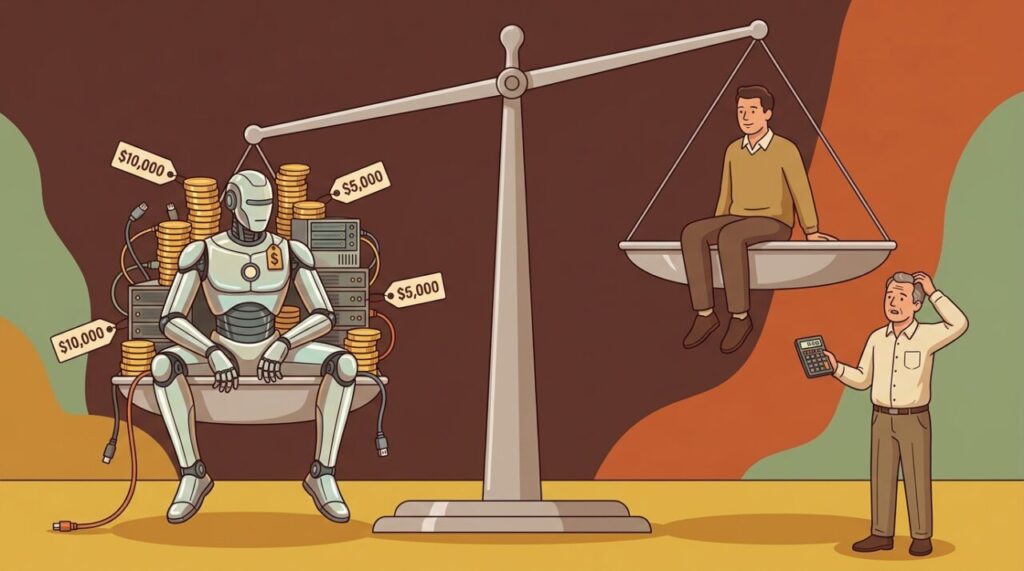
First, this stuff is expensive. Implementing a major AI system requires massive investment in new software, powerful hardware, and robust data infrastructure. Then there are the hidden costs: retraining your entire workforce, redesigning workflows from the ground up, and navigating the painful integration process. For a lot of businesses, especially small and medium-sized ones, the return on that investment isn’t immediately obvious when compared to the known, predictable cost of just paying a human to do the job.
“But We’ve Always Done It This Way” Problem
Large organizations are like giant ships; they don’t turn on a dime. Trying to plug a sleek, modern AI into decades-old legacy software systems is a technical and logistical nightmare. Workflows that have been refined over years, with countless human-built workarounds, have to be completely re-engineered. Think about a mid-sized insurance company that still runs core operations on a mainframe system from the 1990s. You can’t just plug ChatGPT into that. You need a multi-year, multi-million-dollar system modernization project before you can even think about deploying advanced AI.
This “organizational inertia” is one of the most powerful, and most underrated, forces in business. It’s often just plain easier to hire a person to act as the “human glue” between two outdated systems than it is to tear everything down and rebuild the entire architecture. This reality also gives rise to “shadow AI,” where individual teams, frustrated with corporate slow-walking, start using their own AI tools without approval. This creates a mess of security risks, data fragmentation, and unpredictable results.
The Minefield of Law, Liability, and Regulation
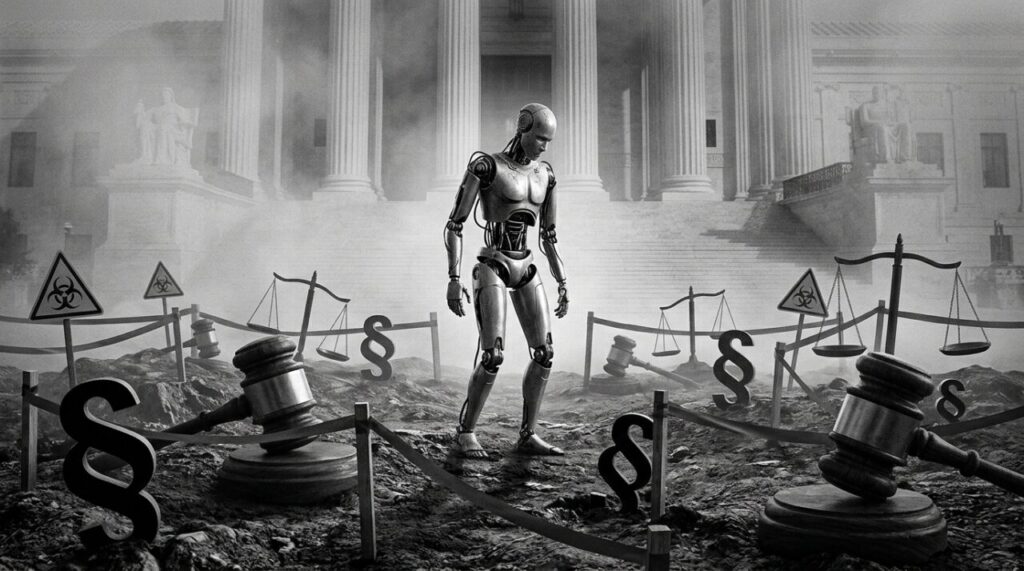
The legal and regulatory landscape for AI is a massive, flashing question mark. And for most companies, unanswered legal questions translate directly into paralysis.
- Liability: If an AI financial advisor gives disastrous advice that bankrupts a family, who is legally responsible? The developer who coded the AI? The company that deployed it? The user who followed its advice? If a self-driving truck causes a fatal accident, who goes to jail? Without clear laws, companies are terrified of deploying autonomous systems in high-stakes environments. The answer right now is: nobody knows. And “nobody knows” is not a phrase that makes corporate lawyers comfortable.
- International Regulatory Chaos: Governments around the world are playing a frantic game of catch-up, and they’re all doing it differently. The EU is rolling out the AI Act, one of the most comprehensive regulatory frameworks anywhere. The U.S. has taken a more sector-by-sector approach. China has its own set of rules focused on content generation. Institutions like the World Trade Organization (WTO) have rules designed for a world of physical goods and services, which are completely ill-equipped to handle the borderless, instantaneous disruption caused by a technology like AI. For any company operating across borders, this patchwork of regulations is a compliance headache of staggering proportions.
- Labor Laws and Unions: In many countries, particularly in Europe, strong labor laws and powerful unions make it difficult and expensive to dismiss employees. The process of replacing a unionized workforce with automation isn’t a quick business decision; it’s a years-long battle of negotiation, legal challenges, and public relations. In Germany, for example, works councils have co-determination rights, meaning management cannot simply decree a transition to AI without extensive negotiation with employee representatives.
The Human Factor: Trust is Everything

Finally, and perhaps most importantly, there’s the simple issue of trust. Would you trust an AI to perform surgery on you? To make a final parole decision for a prisoner?
Public and consumer acceptance is a huge hurdle. Forecasters who predict rapid technological disruption often make the same mistake: they underestimate how long it takes for society to adapt to a new way of doing things, to see it in action, and to grant it their trust. We are a long, long way from trusting algorithms with our lives and livelihoods in any critical domain. And that gap between “technically possible” and “socially accepted” is where millions of human jobs will live for decades to come.
The Automation Spectrum
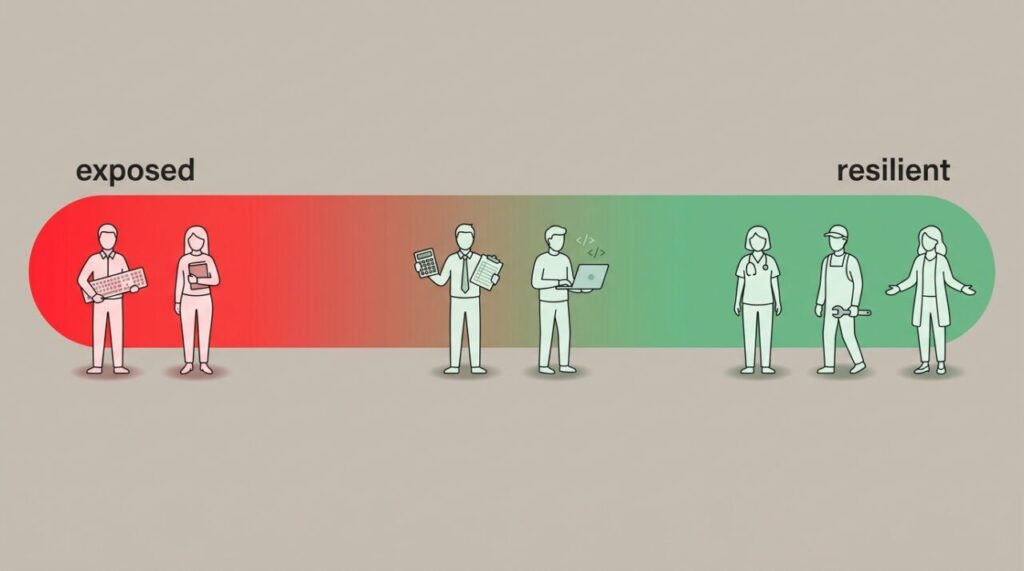
Not all jobs are created equal in the eyes of AI. The risk of automation depends almost entirely on the nature of the work. We can think of jobs as lying on a spectrum, from the highly exposed to the highly resilient. Let’s walk through the major industries one by one, because the devil is truly in the details.
The Front Line: Translation and Localization

If you want to see what AI-driven job transformation looks like in practice right now, look at the translation industry. It’s the canary in the coal mine.
AI is incredibly good at first-draft translations. The workflow has already shifted to a human-AI hybrid model, where AI does the initial bulk work and human experts perform post-editing and “transcreation”, adapting content for cultural nuance, slang, and tone, something AI still regularly fumbles. By 2023, a stunning 91% of the top 100 Language Service Providers had adopted machine-translation post-editing (MTPE) workflows, and 72% of all translation agencies now integrate AI tools. Freelancers using AI can handle 2.5 times more words per hour. The AI translation market is projected to reach $12.1 billion by 2032.
But here’s the critical nuance: the human translator hasn’t vanished. Their job has transformed. They’ve moved from being a creator of text to being a validator and refiner. For high-stakes content like legal documents, medical instructions or literary translation, human oversight is non-negotiable. Even fine-tuned AI models were producing “hallucinations” (confidently stated errors) in 1.2% of translations in 2023. That may sound low, but in a medical prescription, 1.2% is a catastrophe.
The translators who thrived are the ones who embraced the tools and repositioned themselves. The ones who struggled are those who tried to compete with AI on speed and price for commodity work.
Customer Support

The customer service call center is being fundamentally restructured. The model is shifting from large teams of generalists handling every call to an “AI-first, human-escalation” framework. AI chatbots and voice agents are excellent at handling the high volume of simple, frequent queries: “What’s my order status?” “How do I reset my password?” Platforms like Ada report that their AI agents can autonomously resolve up to 83% of support issues.
What’s left for the human? The hard stuff. The emotionally distressed customer. The bizarre, multi-step complaint that doesn’t fit any template. The high-value client who needs a real relationship. Companies like Salesforce reduced some frontline staff, but the remaining jobs were transformed into more specialized, higher-skilled roles. The job title stays the same, “customer support agent”, but the work has fundamentally changed from answering rote questions to being a complex problem-solver and relationship manager.
Microsoft is pushing this even further with its Dynamics 365 Contact Center, deploying three coordinated AI agents that learn from each other to create a semi-autonomous support ecosystem. But even in that vision, the human expert remains the final escalation point, handling the cases the machines can’t crack.
Interesting Fact: A major bottleneck in customer service AI isn’t the AI itself, it’s the plumbing. Integrating advanced AI with legacy IT systems and disparate data sources remains a massive challenge. A poorly configured AI chatbot that frustrates customers can be worse than no AI at all.
Office and Administrative Support

Administrative and office support roles consistently top lists of the most-exposed professions. This makes intuitive sense: data entry clerks, administrative assistants, payroll processors, their work is built on a foundation of structured, repetitive, digital tasks that are prime candidates for automation.
But the story here has a sharp edge that’s often overlooked. The Brookings Institution identified a group of approximately 6.1 million U.S. workers who face both high exposure to AI and low capacity to adapt. For example, limited savings, less-transferable skills, and fewer reemployment options. And a staggering 86% of those workers are women. This isn’t just an abstract economic question; it’s a deeply personal one with stark demographic dimensions.
There’s another hidden risk: the erosion of career pathways. Many administrative jobs serve as “gateway” occupations—the entry points through which workers without four-year degrees gain experience, build skills, and climb into higher-wage roles. If AI automates these entry-level rungs on the ladder, you don’t just eliminate a job. You block an entire route to economic mobility for millions of people. That’s a societal cost that doesn’t show up in any company’s ROI calculation.
The vulnerability is also geographically concentrated. Smaller metropolitan areas, college towns, and state capitals, particularly in the Mountain West and Midwest, have a high density of administrative roles and fewer alternative employment options. For workers in those communities, the transition isn’t about switching departments. It might mean uprooting their entire life.
Interesting Fact: Vulnerability to AI disruption isn’t evenly distributed across the map. It’s concentrated in smaller metro areas and state capitals where administrative roles make up a disproportionate share of the local economy, and where workers have fewer alternative career paths.
Finance, Accounting, and Audit

The finance and accounting sectors are adopting AI with enthusiasm, but the nature of the change is subtler than you might think. AI is automating the most rule-based, data-intensive tasks: expense categorization, invoice processing, bank reconciliation, data extraction for tax preparation. In auditing, AI can now analyze 100% of a company’s financial transactions to flag anomalies, a massive upgrade from the traditional method of random sampling.
But the human accountant isn’t going anywhere. They’re being repositioned. The tedious grunt work of data processing is being handed off to AI, freeing the professional to focus on what actually requires a human brain: strategic tax planning, client advisory, ethical decision-making, and interpreting what the AI’s findings actually mean for the business. A 2025 report showed 21% of tax firms already using generative AI, with another 53% planning or considering adoption. AI-native systems are reducing monthly close cycles from weeks to days and making financial forecasting 30-50% more accurate.
The biggest bottleneck? Ironically, it’s data quality. AI analysis is only as good as the data it’s fed, and inconsistent, messy data remains a persistent, industry-wide problem. You also can’t just hand a junior accountant a new AI tool and expect them to use it brilliantly. There’s a significant skill gap, and firms like PwC are investing heavily in training their people to manage and interpret these new systems.
Interesting Fact: While the Big Four accounting firms are leading AI adoption, the fastest-growing segment is Small and Medium-sized Enterprises (SMEs), with a projected Compound Annual Growth Rate of 44.6%, as affordable cloud-based AI tools become accessible to firms that couldn’t previously afford cutting-edge technology.
Legal and Paralegal Work

AI is reshaping the legal profession by automating huge amounts of document-centric labor. The tasks being taken over are those involving large-scale information processing: e-discovery document review, drafting standard contracts, conducting initial legal research, and building case chronologies. Studies suggest that up to 69% of a paralegal’s billable-hour tasks could be automated by current AI. Law firms are adopting rapidly: 78% reported some form of AI implementation by 2024, a significant jump from 48% just two years earlier.
But here’s the paradox: despite all that automation, the U.S. Bureau of Labor Statistics still projects growth in paralegal employment. Why? Because a critical new role is emerging—the “AI supervisor.” Someone has to check the AI’s work. AI legal tools are far from infallible. One Stanford study found that even purpose-built legal AI tools produced incorrect information over 17% of the time. In a profession where a single factual error in a brief can destroy a case, and a career, you absolutely need a human checking every output.
The result is a job that has been fundamentally redesigned. Paralegals leveraging AI are completing document review tasks 58% faster. They’re not doing less work; they’re doing different work, higher-value, more analytical work, at greater speed. And 73% of paralegal education programs now include AI training, recognizing that managing these tools is the future of the profession.
Software Engineering: The Velocity Paradox

Here’s a story that confounds the simple narrative. You’d think that software engineers, the very people building AI, would be the first to be replaced by it. Instead, the U.S. Bureau of Labor Statistics projects demand for software developers to increase by nearly 18% by 2033. What gives?
The answer reveals a beautiful economic irony: AI makes coding so much more productive that it lowers the cost of building software, which in turn drives higher demand for new and more complex software, which requires more human developers to design, architect, and manage. It’s the same dynamic that played out with ATMs and bank tellers: ATMs made it cheaper to operate a bank branch, so banks opened more branches, and the total number of tellers actually grew.
Today, 82% of developers report using AI tools weekly. On average, development teams use eight to ten distinct AI tools. But the picture isn’t all rosy. There’s a “velocity paradox” at play: code is being written faster than it can be reviewed, tested, secured, and deployed. While code-writing automation is at 51%, automation for downstream CI/build pipelines is only 43%. This imbalance is shifting the bottleneck from creation to quality assurance. And 72% of organizations have experienced a production incident caused by AI-generated code.
Perhaps most fascinatingly, a randomized controlled trial found that experienced developers using early-2025 AI tools actually took 19% longer to complete tasks compared to those without AI, despite perceiving that the AI made them 20% faster. The tools are powerful, but learning to use them effectively, and learning when not to trust them, is a skill in itself.
Interesting Fact: Only about 30% of code suggested by GitHub Copilot is accepted by developers without modification. AI can draft code, but the experienced human’s judgment about whether that code is good, secure, and maintainable is what makes the difference between shipping a product and shipping a disaster.
Healthcare Diagnostics

In healthcare, AI is being cautiously but steadily integrated as a powerful diagnostic and operational tool, functioning as an intelligent assistant to clinicians. Its greatest impact is in pattern-recognition fields like radiology and pathology, where AI can analyze medical images to flag potential abnormalities like detecting early signs of breast cancer in mammograms or identifying nodules in lung CT scans. In dentistry, AI applications analyze radiographs to help clinicians flag potential cavities and periodontal disease. In a trial with the UK’s National Health Service, IBM Watson Health’s AI treatment recommendations aligned with expert oncologists’ plans in 93% of cases.
But the model everywhere is “human-in-the-loop.” AI highlights areas of concern for a human expert to review. The final diagnostic authority stays with the clinician. And there are serious concerns. “Automation bias”—the tendency for humans to over-trust algorithmic output—is a major safety issue. If a radiologist starts rubber-stamping the AI’s all-clear reports without looking carefully, they might miss the cases where the AI got it wrong.
There’s also the “black box” problem: an advanced algorithm can provide a highly accurate prediction, but its internal reasoning is often not interpretable by humans, making it hard for clinicians to critically evaluate the output.
And then there’s bias. Many AI models are trained on historical data that reflects existing health inequities, risking worse outcomes for underrepresented populations. An AI trained primarily on imaging data from white patients may perform poorly when analyzing scans from patients of other ethnicities. These are not minor engineering problems. They are fundamental ethical challenges that must be solved before AI can be trusted in any broad clinical setting.
Marketing, Media, and Content Creation: The Talent Pipeline Risk

AI is acting as both an accelerant and a disruptive force in marketing. It automates high-volume, template-driven content like social media posts, ad copy, product descriptions, personalized email campaigns. It also handles programmatic ad buying and customer segmentation. As a consequence, smaller teams can now produce vastly more content than before.
But there’s a hidden cost that’s only now becoming apparent: the erosion of the talent pipeline. By automating the entry-level tasks that junior marketers used to cut their teeth on, writing basic copy, running simple reports, building social media calendars, companies risk not developing the foundational experience necessary for future mid-level and senior talent.
If no one learns to write compelling copy the hard way, by doing it badly a thousand times first, where will the great creative directors of 2040 come from?
A new skill set is already emerging around “generative engine optimization” (GEO), focused on influencing how AI chatbots and search tools surface brand information. The field isn’t dying—it’s mutating. But the mutation creates losers (junior generalists) and winners (senior strategists who know how to wield AI as a power tool).
The Physical Frontier: Blue-Collar Work and the Robotics Bottleneck
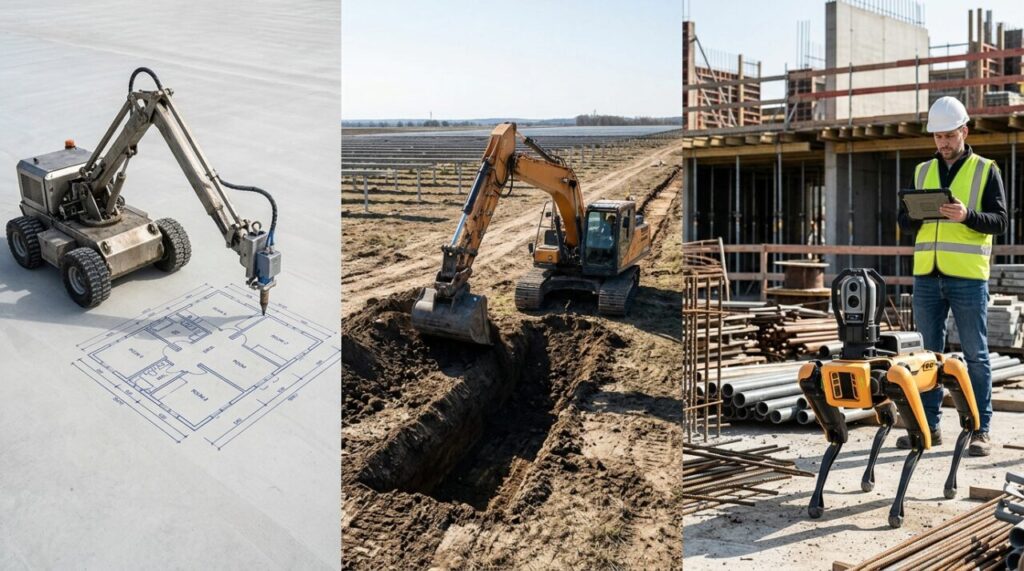
Here’s a twist that the AI hype machine often glosses over: for manual professions, the limiting factor isn’t the software. It’s the hardware. You can have the most brilliant AI algorithm in the world, but if you don’t have a robot capable of physically doing the work in the real world, the job on the ground remains unchanged. The primary bottleneck to automation in blue-collar fields is the robot, not the algorithm.
Construction: Specialized Machines, Not Robot Builders
The construction site is a chaotic, unstructured, and dynamic environment—the exact opposite of the controlled settings where robots thrive. Consequently, construction robotics is not about creating fully autonomous building sites. It’s about deploying specialized machines for narrow, repetitive, and physically punishing tasks. A 2026 report by Zacua Ventures identifies four workflows where robots are achieving real, repeatable production:
- Layout and Measurement: Systems like Dusty Robotics’ FieldPrinter act as “plotters,” taking digital BIM models and printing full-scale layouts directly onto the concrete slab. This compresses a multi-day task into hours and eliminates measurement errors.
- Groundworks and Earthmoving: On large, open sites like solar farms, autonomy kits are being retrofitted onto excavators and pile drivers to perform highly repetitive trenching and piling with greater precision and for longer shifts than human operators.
- Structural and Rebar: Repetitive and back-breaking work like tying rebar intersections on massive bridge decks is being automated by gantry-based robots like TyBot, which can tie intersections significantly faster than a human crew.
- Inspection and Digital Capture: Drones and robotic crawlers like Boston Dynamics’ Spot autonomously navigate sites to collect scan data for quality assurance, progress tracking, and creating digital twins.
What remains human is a long list: complex manipulation, finishing work, MEP (mechanical, electrical, plumbing) installation in cluttered spaces, and on-the-fly problem-solving. The emerging role for field staff isn’t obsolescence, it’s evolution into a “robot technologist” who plans missions, supervises fleets, and interprets the data robots collect. Humanoid builders on the jobsite? That’s hype. Specialized machines that do one specific task very well? That’s reality.
Manufacturing, Logistics, and Agriculture
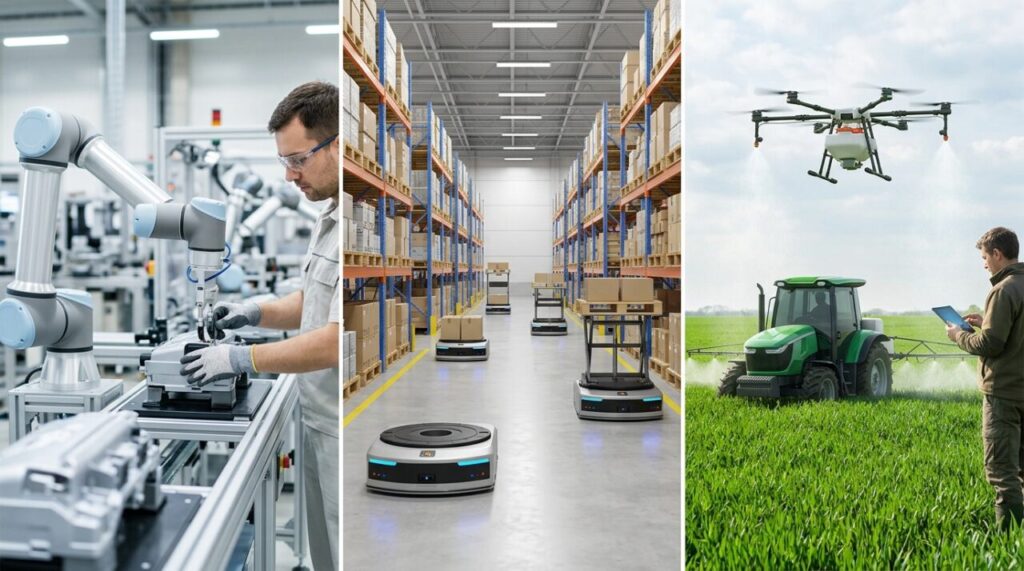
Manufacturing and logistics, taking place in more structured environments, have seen deeper automation. In 2025, an estimated 2.9 million Autonomous Mobile Robots (AMRs) were deployed in logistics centers globally, and AI-Vision systems for high-speed defect detection reached 41% implementation in smart factories by 2026. But even here, the model is collaboration, not replacement. Collaborative robots (“cobots”) now account for a majority of new robotics orders in general industry, designed specifically to work alongside humans who handle complex assembly and exception handling. And 70% of collaborative robot orders now come from non-automotive sectors like food and beverage, signaling a broad shift toward human-robot teaming.
In agriculture, AI is transforming precision farming. AI analyzes satellite imagery, drone data, and soil sensors to enable targeted irrigation and fertilizer application, with documented increases in crop yields of 15-20% and reductions in water usage by 30%. Autonomous tractors and drones perform tasks like planting and spraying. But the strategic management of the farm, maintenance of complex machinery, and many harvesting tasks remain human-led.
For skilled trades, like plumbing, electrical work or HVAC maintenance, the robotics bottleneck is even more pronounced. While an AI app might help diagnose a problem, the physical repair requiring dexterity, problem-solving in unique and constrained spaces, and real-time sensory feedback, is far beyond the capabilities of current robotics.
These jobs will see their tools evolve, but their core function will change very slowly. A plumber in 2036 will still be crawling under houses.
Inside the Machine: How AI Actually Arrives in a Government Ministry

To make all of this feel real, let’s move away from abstract percentages and walk through a plausible, detailed adoption scenario. Imagine a 1,000-person public sector organization—the “Ministry of Urban Development”, deciding to integrate AI.
Here’s how it would likely unfold over five years. Not with a bang, but with a series of careful, deliberate, and sometimes frustratingly slow steps.
Phase 1 (Year 1): The Low-Hanging Fruit
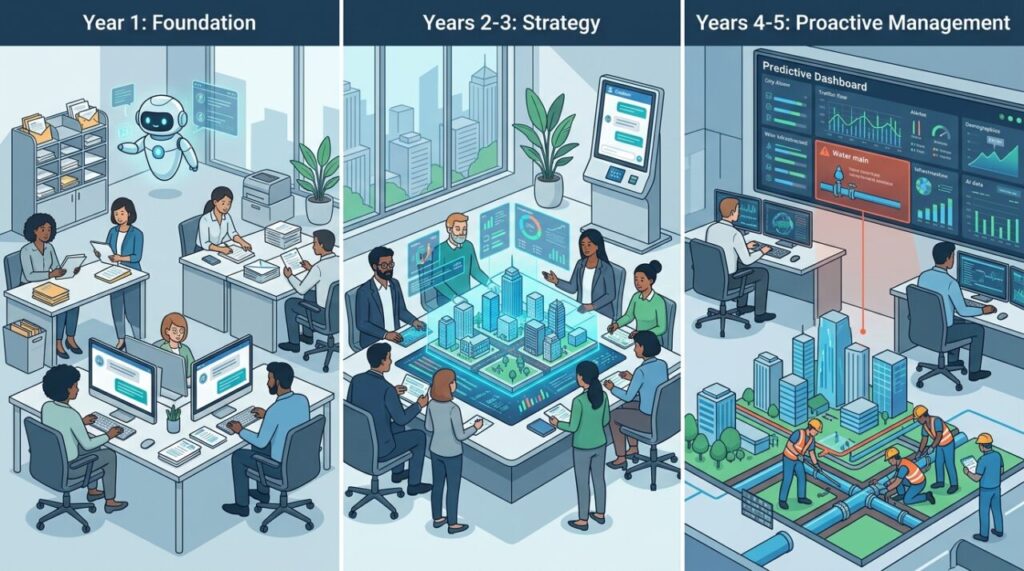
The Goal: Target internal inefficiencies, build staff familiarity with the technology, and get some easy wins without touching public-facing services.
The Rollout: The Ministry starts with the back office. An AI-powered document processing system is deployed to automatically sort and classify incoming permit applications and public correspondence, cutting down on manual sorting. The finance department gets a tool to automate invoice processing and flag potential irregularities for human review. For staff, an internal chatbot is launched to answer common IT and HR questions: “How do I reset my password?” “How many vacation days do I have left?”
What actually happens behind the scenes: This phase is 80% change management and 20% technology. The IT department spends months cleaning and standardizing decades of messy data so the AI has something usable to work with. The Ministry’s procurement team navigates a Byzantine government purchasing process to select a vendor. Training sessions are held, and they’re met with a mix of curiosity, skepticism, and outright resistance. Some senior staff refuse to use the new system. A small, cross-departmental “AI Governance Team” is formed to set rules, monitor performance, and deal with the inevitable early glitches.
The Human Impact: About 50-75 admin employees see their daily work change. Staff who used to spend their days on data entry are retrained to become “human-in-the-loop” verifiers—their new job is to quality-check the AI’s classifications and handle the tricky exceptions the machine can’t figure out. The focus is entirely on upskilling and redesigning processes, not reducing headcount. Public services remain 100% human-led.
Phase 2 (Years 2-3): Augmenting the Experts

The Goal: Improve the quality and speed of public services by giving professional staff better tools, while keeping humans in full control of all decisions.
The Rollout: A public-facing chatbot is launched on the Ministry’s website. It’s more advanced, capable of handling multi-step queries like checking a permit’s status, explaining basic zoning rules, and processing simple fee payments. For the Ministry’s urban planners, a powerful new data analytics tool is procured. This AI can analyze traffic patterns, population data, and environmental factors to model the potential impact of different development scenarios.
What actually happens behind the scenes: The public chatbot launches to mixed reviews. It handles 60% of queries well but stumbles on anything unusual, leading to complaints in local media. The governance team hastily adds a prominent “Talk to a Human” button. Meanwhile, the urban planners love the new analytics tool but quickly discover its limitations: the AI’s scenarios are only as good as the historical data it was trained on, and it consistently underestimates the impact of community opposition to new developments. The planners learn to treat the AI’s output as a useful starting point, not a conclusion.
The Human Impact: Roughly 200 planners and service agents start using AI as a daily tool. Customer service staff, freed from answering the same 20 questions all day, can now spend their time on the complex, unique resident issues escalated by the chatbot. Training shifts to focus on data interpretation, understanding the limitations of the models, and learning how to “collaborate” with an algorithm.
Phase 3 (Years 4-5): Towards Predictive Governance

The Goal: Shift from being reactive to proactive by using AI to anticipate problems before they happen.
The Rollout: The Ministry deploys a predictive maintenance system for public infrastructure. By analyzing data from sensors, weather forecasts, and historical repair logs, the AI model predicts which water mains or bridges are at the highest risk of failure, allowing for targeted, proactive repairs. The policy team uses even more sophisticated AI simulations to test the potential long-term economic and social impacts of a major zoning change before it’s even debated publicly.
What actually happens behind the scenes: The predictive maintenance system delivers a genuine win—a water main that the AI flagged as high-risk actually fails, but because the Ministry had already scheduled a proactive repair, the disruption is minimal. This success story becomes the internal justification for further AI investment. However, an audit reveals that the AI model for predicting infrastructure failures performs poorly in the city’s oldest neighborhoods, where historical repair data is sparse and sensor coverage is thin. An embarrassing bias is discovered: the system is better at protecting newer, wealthier areas. The governance team commissions an equity audit and mandates that the model be retrained with supplementary data.
The Human Impact: By year five, AI touches the work of over 300 employees. New, specialized roles like “AI Systems Auditor” and “Infrastructure Data Analyst” emerge. The organizational structure starts to change, with data expertise becoming embedded within traditional departments instead of siloed in IT. Crucially, even after five years of comprehensive integration, the Ministry has not had mass layoffs. Instead, jobs have been fundamentally redesigned, and the overall capability of the organization has increased.
This slow, cautious, and staged process, driven by risk management, institutional capacity building, and the need for human oversight—is a far more realistic picture of AI adoption than the sci-fi fantasy of instant replacement.
Interesting Fact: In Switzerland, a study of public organizations found that internal factors, like existing processes, IT infrastructure, and organizational culture, were far more critical to successful AI adoption than external pressures like vendor hype or public demand . The biggest challenges were always on the inside.
Layoffs vs. Attrition: How Companies Actually Change Headcount
When a company does decide that AI allows it to operate with fewer people, the process rarely looks like the dramatic movie scene where security guards escort lines of terminated employees out of the building. That kind of mass layoff is brutal, terrible for morale, and catastrophic for public relations.
In reality, the process is one of practical, gradual, and often quiet restructuring. The primary methods are far less dramatic:
- Job Redesign and Augmentation: This is the most common outcome. The company doesn’t eliminate the “customer support agent” role; it transforms it. By using AI to handle simple queries, they can now operate with a smaller team of more highly skilled agents who act as expert problem-solvers. The job title stays the same, but the work and the skills required, have fundamentally changed.
- Headcount Compression via Attrition: This is the quietest and most common way to reduce a workforce. Instead of firing people, a company simply institutes a hiring freeze and stops replacing employees who retire or leave voluntarily. If a department of 20 people typically sees two people leave each year, the company can shrink that team by 20% in just two years without a single layoff. It’s a slower, less disruptive way to align labor costs with new productivity levels over time. It’s not dramatic. It doesn’t make headlines. But it’s how most headcount reduction actually happens.
- Creative Destruction and New Roles: As old tasks are automated, new needs and new jobs emerge. History is full of this pattern. The automobile displaced blacksmiths but created millions of jobs in manufacturing and repair. The current AI revolution is already creating jobs that were unimaginable just a few years ago: “prompt engineers,” “AI trainers,” “AI ethicists,” and “AI operations managers”.
The BLS provides a fantastic historical contrast that perfectly illustrates the difference between real replacement and hyped replacement. In the early 2000s, it correctly projected a massive employment collapse for “photographic process workers” because digital cameras were a clear, direct, and total replacement technology.
Film processing didn’t need to be improved, it needed to cease to exist. In contrast, it made no such apocalyptic projection for truck drivers in the 2010s, despite the deafening hype around self-driving trucks, correctly identifying that the regulatory, safety, and infrastructure hurdles would make the transition incredibly slow and uncertain. The rollout of AI across the economy looks far more like the slow, messy case of the truck driver than the sudden collapse of the photo lab.
Interesting Fact: In China, the introduction of industrial robots has been linked to a net increase in jobs, particularly in labor-intensive industries. The productivity gains from the robots were so significant that they stimulated economic growth, leading to the creation of new roles that outweighed the ones that were automated.
The Pushback: How Workers, Unions, and Politics Will Shape the Future

Technology doesn’t just happen to us. We react to it. We organize. We pass laws. We go on strike. The way workers, unions, and our political systems respond to AI will be just as important in shaping the future of work as the technology itself. And if you think this pushback is just Luddites smashing machines, you haven’t been paying attention.
The Union Strategy: Not Anti-Tech, but Pro-Worker
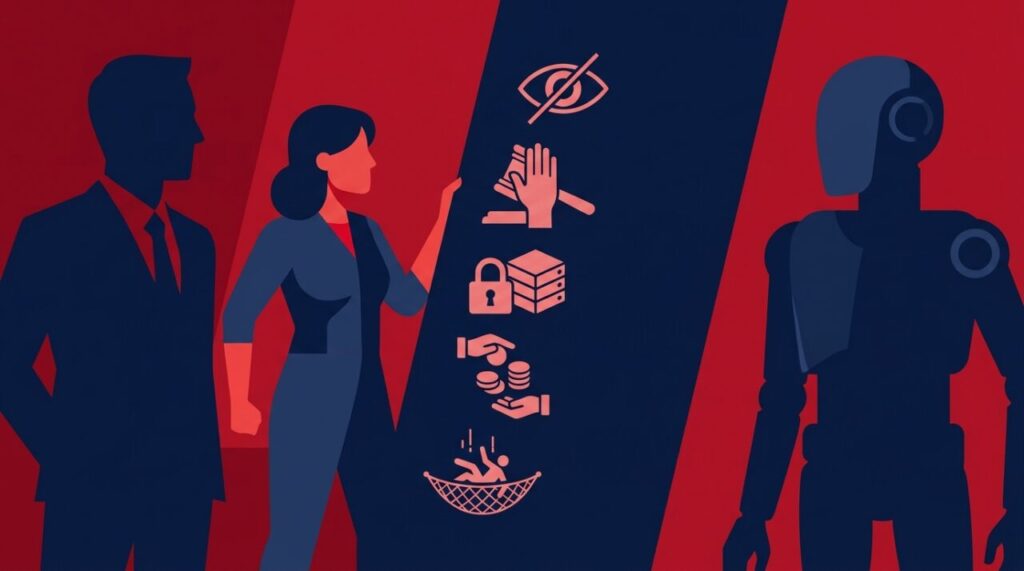
Unions are taking a proactive and surprisingly sophisticated approach. They aren’t trying to ban AI; they’re fighting for a seat at the table to govern how it’s used. An analysis by the UC Berkeley Labor Center shows that unions are coalescing around a clear, coherent set of demands:
- No Secret Robot Bosses: Workers have a right to know when and how AI is being used to monitor, manage, or evaluate them. They are demanding transparency. Unions have backed legislation like the proposed “No Robot Bosses Act” and the “Stop Spying Bosses Act” to curb excessive AI-powered surveillance.
- Humans in Command: Unions are pushing for laws ensuring that critical decisions like hiring, firing, discipline, and pay must ultimately be made by a human, not an algorithm. An AI can flag a pattern; a human must make the call.
- Control Over Our Data: Workers must have a say in what data is collected about them on the job and how that data is used. This is a direct pushback against the growing trend of AI-powered workplace surveillance that can track everything from keystrokes to bathroom breaks.
- Sharing the Wealth: If AI makes a company more productive and profitable, the workers who made that possible deserve a share of the gains. This could mean higher wages, better benefits, or a shorter workweek for the same pay.
- A Just Transition: If a job is genuinely eliminated by technology, companies have a responsibility to provide advance notice, severance pay, and meaningful retraining opportunities.
Real-World Contract Victories
These principles aren’t just wish lists. They’re turning into concrete, real-world contract victories:
- The Writers Guild of America (WGA) secured a landmark contract stipulating that AI cannot be credited as a writer, protecting writers’ roles and incomes. AI can be used as a tool, but a human writer must be attached to every project.
- The Screen Actors Guild (SAG-AFTRA) won groundbreaking protections requiring actor consent and fair compensation for the use of their digital likenesses. No more scanning an extra’s face and using it in perpetuity without payment.
- The Culinary Workers Union in Las Vegas negotiated robust severance packages for workers who might be displaced by automation in hotels and casinos.
The message is consistent across industries and borders: this isn’t about stopping technology. It’s about ensuring it is deployed in a way that respects workers and shares the benefits equitably. And organized labor, for all its critics, is proving to be one of the most effective institutions at actually shaping the terms of AI adoption.
The Political Dimension

Beyond the workplace, the political system will inevitably be drawn in. As job churn accelerates, pressure will mount for governments to strengthen social safety nets, reform education, and rethink tax policy. The debate over policies like Universal Basic Income (UBI), wage subsidies, and portable benefits will move from the fringes to the center of political life.
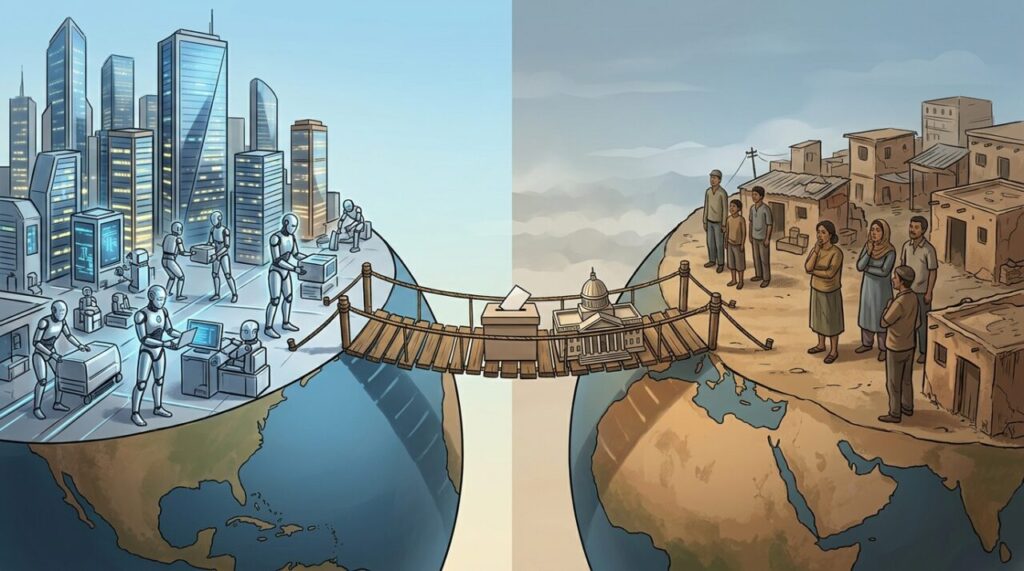
There’s also a growing conversation about fairness at a global scale. The International Monetary Fund notes a significant divide: about 60% of jobs in advanced economies are exposed to AI’s impact, where it might complement or substitute for human labor. But in emerging markets and low-income countries, exposure is lower, and the threat is different: intensified competition from foreign businesses that have adopted automation, making it harder for developing nations to compete on the global stage. AI could accelerate the wealth gap between nations as easily as it widens it within them.
A View into the Future: Plausible Scenarios for the Next 100 Years

So, where is all this heading? Projecting the future is a fool’s errand, but it’s a useful one. We can’t predict specific events, but we can outline plausible scenarios based on two things we know reasonably well: the trajectory of the technology and the powerful, slow-moving forces of global demography.
The Next 5 Years (to ~2031): The Great Integration

This is the phase we’re entering now. It will be defined by the widespread rollout of current-generation AI into our daily workflows.
Generative AI will become a standard part of the office software suite, much like spreadsheets or word processors are today. It will be used primarily as an assistant, a “co-pilot” for drafting reports, writing code, and summarizing documents. Based on real-world usage data, current AI models are already estimated to have the potential to increase U.S. labor productivity growth by 1.8% annually over the next decade.
But don’t expect miracles right away. The economy will be in the early, awkward phase of the “productivity J-curve”—making huge investments in new tech and training that might not yet show up as bottom-line growth.
Studies of specific tasks already show AI can reduce completion times by 40% and improve output quality by 18%, but translating those micro-level wins into macro-level economic data takes time. The biggest challenge won’t be the tech itself, but getting organizations to fundamentally rethink their processes to take advantage of it. An urgent push for AI literacy will sweep through corporations and educational institutions, with over 40% of workers potentially requiring significant upskilling by 2030.
White-collar jobs will feel the most change in this period. Public sector adoption will move more slowly, held back by procurement cycles and bureaucratic inertia [3]. For blue-collar work, the impact will come from maturing robotics and logistics automation rather than generative AI. And the arrival of embodied AI—humanoid robots—is occurring faster than the development of regulations to govern them, creating what some analysts call a “regulatory drought” [28]. AGI remains a distant research concept, not a practical factor in this timeframe.
The Next 10 Years (to ~2036): The Productivity Payoff and the Social Strain
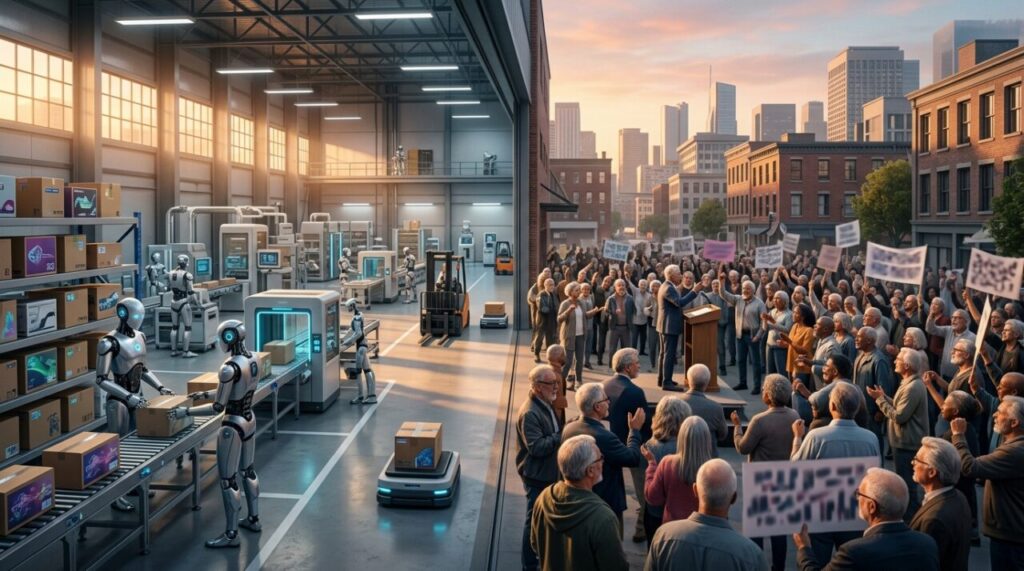
This is the decade where the J-curve likely pays off. The productivity gains from AI should become undeniable, with some models forecasting that generative AI could contribute 1.5 percentage points to annual U.S. productivity growth. Globally, GDP forecasts are expected to be revised upwards, with the U.S. seeing a potential 0.4 percentage point lift by 2034. AI will become a standard, non-negotiable tool in most professional fields. But this is also when the social friction will become acute.
The automation of entire categories of cognitive tasks will accelerate, creating significant job churn. The idea of a shorter workweek will move from a radical theory to a serious policy proposal in some countries, seen as a way to distribute the gains of automation. Welfare systems will face their first real stress test, and Universal Basic Income (UBI) will be debated at the national level in multiple developed countries.
Demographically, the global population will cross 9.3 billion around 2037. Aging workforces in developed nations will create a powerful economic pull for even more automation, especially in healthcare and service sectors. With global fertility declining, migration will become the primary driver of population growth in 62 countries, including the United States and Canada. Early, commercially viable humanoid robots will begin appearing in controlled environments like warehouses and retail stockrooms.
The primary uncertainty in this period isn’t technology, it’s society. How will political systems manage the social friction from rapid job displacement? Will the new jobs be sufficient in number and quality to absorb displaced workers? These are political questions, not engineering ones.
The Next 20 Years (to ~2046): Deep Integration and a New Normal

By the mid-2040s, AI and robotics will be deeply woven into the economic fabric. The global fertility rate is projected to fall to 2.0 births per woman, just below the replacement level, cementing the trend of global population aging. Society will have been forced to restructure around this new reality.
The 40-hour, 9-to-5 workweek could be a historical artifact for many knowledge workers. The economy will feature a diverse mix of work: highly compensated, creative-technical roles managing AI systems; a large segment of human-to-human service and care jobs; and a growing portfolio of project-based or “gig” work. McKinsey projects that generative AI could enable 0.1% to 0.6% annual labor productivity growth through 2040—a sustained, if not explosive, impact.
For many advanced economies, automation won’t just be about efficiency. It will be a demographic necessity to maintain living standards and care for a large elderly population. Workforces in Europe, East Asia, and North America will be shrinking and significantly older. Developed nations will likely have implemented next-generation social safety nets. Perhaps some form of UBI, negative income tax, or universal access to essential services, funded by new taxes on capital, data, or automated economic activity.
The single biggest uncertainty in this timeframe is the progress toward AGI. If there’s a breakthrough, all bets are off. If AGI remains elusive, the world will see a more linear, albeit dramatic, continuation of current trends.
Interesting Fact: By the late 2050s, more than half of all global deaths are projected to occur at age 80 or older, up from just 17% in 1995.
The Next 50 Years (to ~2076): The Automated Economy Meets Peak Human

Around the 2070s, two monumental trends will collide: a highly automated global economy and the probable peak of the entire human population. By the late 2070s, the number of people globally aged 65 and over is projected to outnumber children under the age of 18 for the first time in human history. The world population will be approaching its peak of approximately 10.3 billion, which the UN projects will occur in the mid-2080s.
This creates a world with an unprecedented dependency ratio, a challenge that can only be met with extreme levels of productivity, a feat likely achievable only through advanced AI and automation. The Penn Wharton Budget Model projects that AI could lead to a permanent GDP level that is 3.7% higher by 2075.
In this world, the very concept of “work” as a necessity for survival may have been transformed in many countries. Human activity might shift toward endeavors that AI cannot replicate or that we choose to reserve for ourselves: scientific exploration, artistic expression, community building, and philosophical inquiry. The central political challenge will be global inequality and managing the big gap between nations that have harnessed advanced automation and those left behind.
The Next 100 Years (to ~2100): A World After Population Peak

Looking out to 2100 is an act of speculative fiction, but it’s one grounded in the near-certainty of demography. The global population will be shrinking to around 10.2 billion, down from its 2080s peak. Humanity will be older than at any point in its history, with a global life expectancy over 82. The UN’s 2100 population projection is now about 700 million fewer people than was anticipated just a decade ago, a revision driven by a faster-than-expected decline in global fertility rates.
Demographic power will have shifted dramatically. Sub-Saharan Africa will be home to over a third of the world’s people, while China’s population may have shrunk to 633 million.
The role of AI in this future is the great unknown. If AGI has been achieved and aligned with human values, it could function as a planetary-scale problem-solving engine, tackling everything from climate change to disease and creating a post-scarcity world. If it’s misaligned, it’s an existential risk. In a more modest future without AGI, the world would be hyper-automated but still recognizably human-run. The central question for humanity would be philosophical: What is our purpose in a world where our labor is no longer needed to survive?
Interesting Fact: By 2070, Nigeria is projected to become the third most populous country in the world, surpassing the United States, illustrating the dramatic demographic shift that will reshape the global economy in the second half of this century. The economic and political center of gravity of the world is moving.
What the Big Institutions Are Actually Saying

It’s worth stepping back and looking at the consensus view from the world’s major economic and labor institutions. When you look at them together, a remarkably consistent picture emerges, and it’s not one of doom.
- The World Economic Forum (WEF): Projects that while around 85 million jobs may be displaced by 2030, an even greater number, are expected to be created. The net result, on a global macroeconomic scale, is job growth, not job destruction.
- The Brookings Institution: Identifies a vulnerable group of approximately 6.1 million U.S. workers who face both high AI exposure and low adaptive capacity—limited savings, less-transferable skills, fewer reemployment options. This research is crucial because it puts a human face on the statistics and identifies who specifically needs help.
- The International Monetary Fund (IMF): Warns about the global divide. About 60% of jobs in advanced economies are exposed to AI, but the threat to developing nations is different: being left behind as competitors in rich countries automate.
- The U.S. Bureau of Labor Statistics (BLS): Remains cautious, emphasizing deep uncertainty and making adjustments only when there are clear, data-driven expectations for employment changes in specific occupations. They’ve seen too many hype cycles to jump to conclusions.
- Goldman Sachs: Projects that generative AI could boost global GDP by 7% over a decade, with the strongest effects in the most technologically advanced economies.
So, the overwhelming consensus is not one of impending doom. It’s a picture of a critical transition period. The challenge isn’t a future without jobs; it’s navigating the shift from the jobs of today to the jobs of tomorrow. And that navigation requires massive investment in reskilling, with estimates suggesting nearly 60% of the workforce will need some form of retraining by 2030, and building social safety nets robust enough to support those left behind.
Conclusion: A Future of Adaptation, Not Apocalypse

The narrative of an AI-driven job apocalypse is powerful, simple, and wrong.
The evidence points not to a sudden end of human labor, but to a prolonged, challenging, and ultimately manageable transition. AI is not replacing us wholesale. It is automating tasks, forcing us to redesign our jobs and rediscover what is uniquely valuable about human work. Its adoption isn’t instantaneous; it’s being throttled by the messy, stubborn friction of real-world economics, law, infrastructure, and human culture.
Yes, some jobs will disappear. That is the painful and unavoidable reality of every major technological shift in history. But many more will be transformed, and new ones we can’t yet imagine will be born.
This is not a call for complacency. The transition will be disruptive, and it will be painful for many, especially for those without the resources or support to adapt. The Brookings research makes this stark: millions of workers are in genuinely vulnerable positions, concentrated in specific demographics and geographies, and they need targeted support, not vague platitudes about “learning to code.”
The challenge for all of us as individuals, as companies, and as societies, is not to stop the technology, but to manage its integration with wisdom and humanity. It means investing in people as much as we invest in machines. It means reforming our education systems to foster a culture of lifelong learning. It means building agile and robust social safety nets to catch those who fall. It means giving workers a voice in how these tools are deployed, because the unions have shown that organized pushback produces better outcomes for everyone.
And it means fixing perverse incentives, like a tax code that makes it cheaper to buy a robot than to retrain a human.
The future of work isn’t humans versus machines. It’s humans with machines. The baseline reality is that our roles are changing. And in this new world. Our most human skills like our creativity, our critical thinking, our empathy, and our ability to connect with one another, are becoming the most valuable assets we have.
The question isn’t whether AI will change the world of work. It already is. The real question is whether we’ll manage that change wisely.
The answer to that is up to us, not the machines.
References
- Human population projections – Wikipedia
- World population projected to reach 9.8 billion in 2050, and 11.2 billion in 2100 – United Nations
- Exploring artificial intelligence adoption in public organizations: a comparative case study – Public Management Review
- AI Job Displacement Statistics (2026 Data & Trends) – CLICKVISION
- AI In 2026: 10 Predictions On Automation And The Future Of Work – Forbes
- UN projects world population to peak within this century – United Nations
- World Population Prospects 2024: Summary of Results – United Nations
- 5 Facts: How the World’s Population is Expected to Change by 2100 – The Pew Charitable Trusts
- New UN population projections: Where are we headed? – Population Connection
- Population – United Nations
- How AI is Changing the Dental Practice Experience in 2024? – Stomadent Dental Laboratory
- A Proactive Response to AI-Driven Job Displacement – Mercatus Center
- Integration of Artificial Intelligence in Healthcare: A Review of Current Applications, Challenges, and Future Prospects – PMC
- The AI Moment? Possibilities, Productivity, and Policy – San Francisco Fed
- AI, Productivity, and Labor Markets: A Review of the Empirical Evidence – International Center for Law & Economics
- A First Look at Labor’s AI Values: An analysis of recent statements about technology by unions and other worker organizations – UC Berkeley Labor Center
- Unions Give Workers a Voice Over How AI Affects Their Jobs – Center for American Progress
- Incorporating AI impacts in BLS employment projections: occupational case studies – U.S. Bureau of Labor Statistics
- Upgrading Our Longer-Run Global Growth Forecasts to Reflect the Impact of Generative AI (Briggs/Kodnani) – Goldman Sachs
- Baker Tilly | AI, job displacement and the case for a new social contract
- r/Futurology on Reddit: AI Should Mean Fewer Work Hours for People—Not Fewer People Working
- AI Job Displacements: UBI to the Rescue? – Seven Pillars Institute
- 85+ AI in the Translation Industry Statistics of 2024 – GITNUX
- Reshaping work: Navigating the AI-driven labour market – UNICEF
- AI in Language Translation Global Market Report 2024 – The Business Research Company
- Construction Robotics Report 2026 – Zacua Ventures
- The AI Customer Service Platform – Ada
- The State of AI in Software Engineering – Harness
- What is Physical AI and how is it changing manufacturing? – World Economic Forum
- How AI may reshape career pathways to better jobs – Brookings
- How are different accounting firms using AI in 2025? – Thomson Reuters
- AI Will Reshape More Jobs Than It Replaces – BCG
- AI Automation Risk Report: The 50 Jobs Most Exposed To AI – EDsmart
- AI poses bigger threat in jobs with more women, study finds – CBS News
- How artificial intelligence impacts the US labor market – MIT Sloan
- The impact of artificial intelligence on employment: the role of virtual agglomeration – Nature
- Research: How AI Is Changing the Labor Market – Harvard Business Review
- AI in Accounting: The Complete 2026 Guide – DualEntry
- AI and the Role of Paralegals – Donald Billings Law
- Lost in translation? AI’s impact on translators and foreign language skills – CEPR
- AI and the Role of Paralegals – Donald Billings Law
- Will AI Replace Paralegals? – Clio
- Is AI the New Paralegal? A Reality Check for 2025 and Beyond – Medium
- Measuring the Impact of Early-2025 AI on Experienced Open-Source Developer Productivity – METR
- AI-Generated Code Statistics 2026: Can AI Replace Your Development Team? – Netcorp
- AI Will Shape the Future of Marketing – Harvard DCE
- AI at Work: The Future of Marketing Jobs – McGraw Hill
- AI in Public Sector: Top Use Cases You Need To Know – SmartDev
- How cities and counties are using artificial intelligence – Oracle
- 2026 Smart Factory Outlook: AI, Robotics – IIoT World
- AI in Agriculture Statistics 2025: Key Data & Trends – Farmonaut
- 59 AI Job Statistics: Future of U.S. Jobs – National University
- AI Job Replacement Statistics (2025–2030): Industries Most Affected – Davron
- AI And Automation Trends 2026: From Efficiency To Enterprise Resilience – Redwood
- AI, Job Displacement, and the WTO: Identifying Legal Gaps and Charting a Worker – yjil.yale.edu
- Measuring U.S. workers’ capacity to adapt to AI-driven job displacement – Brookings
- Belaboring the Algorithm: Artificial Intelligence and Labor Unions – Yale Journal on Regulation
- AI Will Transform Teaching and Learning. Let’s Get it Right – Stanford University
- AI in Healthcare: Enhancing Patient Care and Diagnosis – Park University
- AI in Healthcare Diagnostics: Promises, Pitfalls and the Path Forward – INSEAD Knowledge
- Microsoft Dynamics 365 Contact Center Features 3 Coordinated AI Agents – CX Today
- The Projected Impact of Generative AI on Future Productivity Growth – Penn Wharton Budget Model
- The economic potential of generative AI: The next productivity frontier – McKinsey
- AI and the translation industry – Acolad
- Estimating AI productivity gains from Claude conversations – Anthropic